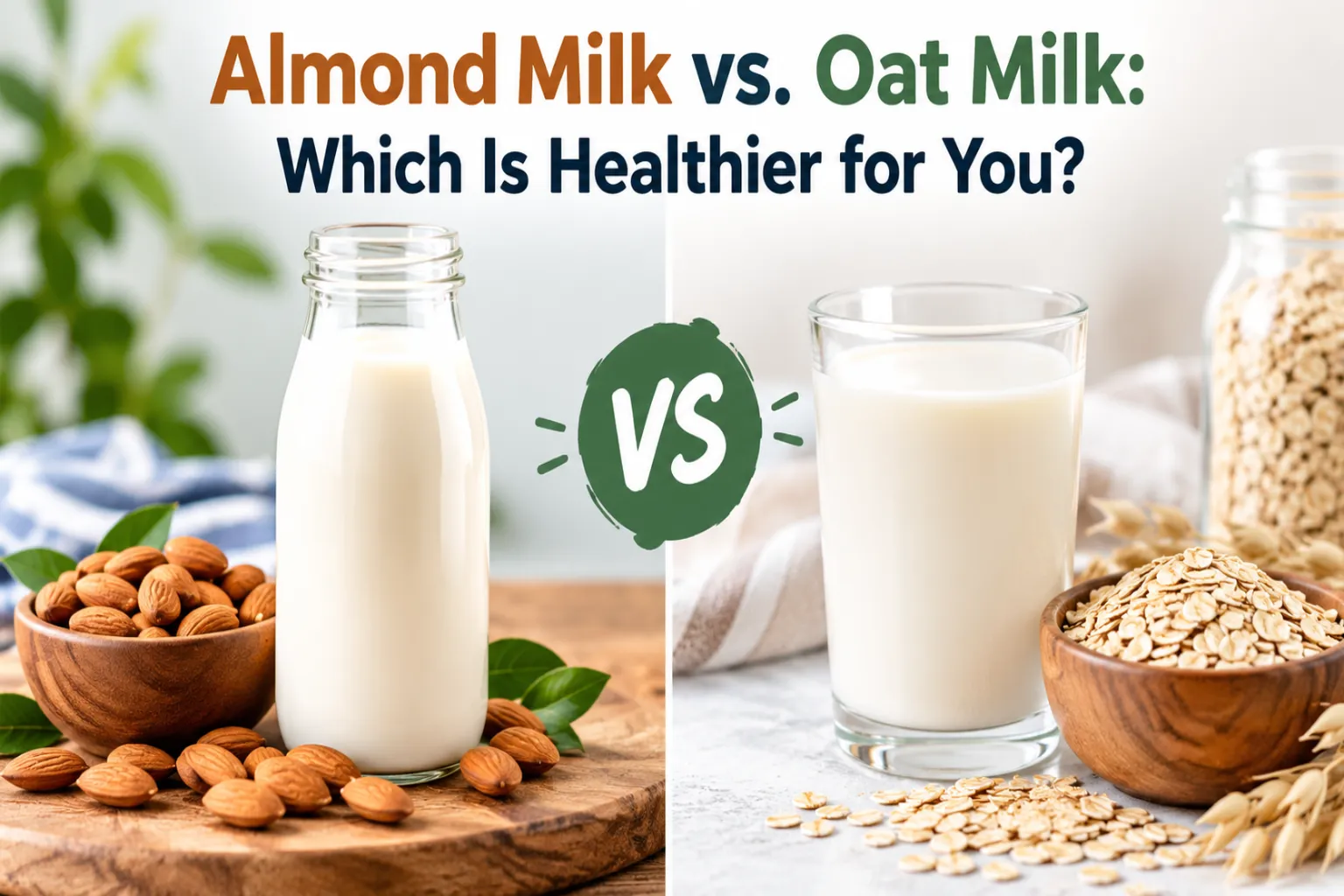

Choosing between almond milk and oat milk can be confusing, especially when both options are popular alternatives to dairy milk. Whether you want to reduce calories, manage your carbohydrate intake, or enjoy a creamy drink with your coffee, understanding their nutritional differences can help you make a better choice.
Almond milk and oat milk both offer benefits, but the healthier option depends on your dietary needs, health goals, and the ingredients listed on the product label.
What Is Almond Milk?
Almond milk is a plant-based beverage made by blending almonds with water and filtering the mixture. It has a light texture and a mild, slightly nutty flavor that works well in smoothies, cereal, coffee, and baking.
One of its biggest advantages is its relatively low calorie and carbohydrate content, particularly in unsweetened varieties. Many commercial brands also add calcium, vitamin D, and vitamin E to improve their nutritional value.
However, almond milk is generally low in protein. People with almond or other relevant tree nut allergies should also avoid it.
What Is Oat Milk?
Oat milk is made by combining oats with water and processing the mixture into a smooth beverage. It has a naturally mild, slightly sweet taste and a creamy consistency that makes it popular in coffee shops.
Compared with almond milk, oat milk generally contains more carbohydrates and often more protein and fiber. However, its nutritional content varies by brand and processing method.
Some varieties contain added sugars, oils, or other ingredients to improve their flavor and texture. Choosing an unsweetened option can help you avoid unnecessary added sugar.
Almond Milk vs. Oat Milk: Nutrition Comparison
The following table shows approximate nutrition values for one cup of unsweetened almond milk and oat milk. Actual amounts vary by brand and fortification.
| Nutrient | Almond Milk | Oat Milk |
|---|---|---|
| Calories | 30–60 | 70–120 |
| Protein | 1–2 g | 2–4 g |
| Carbohydrates | 1–8 g | 12–16 g |
| Fiber | 0–1 g | 1–2 g |
| Saturated Fat | Usually low | Usually low |
| Calcium | Varies by brand | Varies by brand |
| Added Sugar | Often 0 g | Often 0 g in unsweetened varieties |
Note: These are general estimates, not universal product values. Always check the Nutrition Facts label.
Health Benefits of Almond Milk
1. Lower in Calories
Unsweetened almond milk is often lower in calories than oat milk. This can make it a useful option for people trying to manage their overall calorie intake.
2. Lower in Carbohydrates
Almond milk generally contains fewer carbohydrates, making it suitable for people following a lower-carbohydrate eating plan.
3. Often Fortified With Nutrients
Many products contain added calcium and vitamins D and E. Check the label because not every brand provides the same nutrients.
Health Benefits of Oat Milk
1. Creamy Texture
Oat milk works particularly well in lattes, cappuccinos, smoothies, and recipes that benefit from a thicker consistency.
2. More Carbohydrates for Energy
Its carbohydrate content can provide energy as part of a balanced diet. However, people monitoring blood sugar or carbohydrate intake should compare labels carefully.
3. Some Fiber and Protein
Oat milk may contain more fiber and protein than almond milk, although amounts vary considerably. It is not a high-protein beverage compared with dairy or soy milk.
Which Milk Is Better for Weight Management?
Unsweetened almond milk is often the better choice for reducing calorie intake. Its lower calorie and carbohydrate content can make it easier to fit into a calorie-conscious eating plan.
Oat milk can still be part of a balanced diet, especially when you prefer its taste and texture. Portion size and added sugars matter more than simply choosing one type of milk.
Which Milk Should You Choose?
Choose almond milk if you want a beverage that is typically lower in calories and carbohydrates. Choose oat milk if you prefer a creamier texture and want a beverage that generally provides more carbohydrates and sometimes more protein and fiber.
If you need more protein, consider fortified soy milk or another suitable higher-protein alternative. If you rely on plant-based milk for calcium and vitamin D, compare nutrition labels before buying.
Frequently Asked Questions
1. Is almond milk healthier than oat milk?
It depends on your goals. Almond milk is generally lower in calories and carbohydrates, while oat milk often contains more protein and fiber.
2. Which milk is better for weight loss?
Unsweetened almond milk is often a practical choice because it usually contains fewer calories per cup.
3. Is oat milk good for everyday use?
Yes, oat milk can fit into a balanced diet. Choose a product with little or no added sugar and check its calcium and vitamin D content.
4. Which milk has more protein?
Oat milk usually contains more protein than almond milk, but both are generally lower in protein than dairy milk and soy milk.
Final Verdict
Almond milk is often the better option for people watching calories and carbohydrates, while oat milk is a good choice for those who prefer a creamy, mild-tasting beverage. Neither is automatically healthier for everyone.
For the best everyday choice, select an unsweetened product, check its protein and calcium content, and look for appropriate fortification. Your overall diet and nutritional needs matter more than the type of milk alone.

Read More