
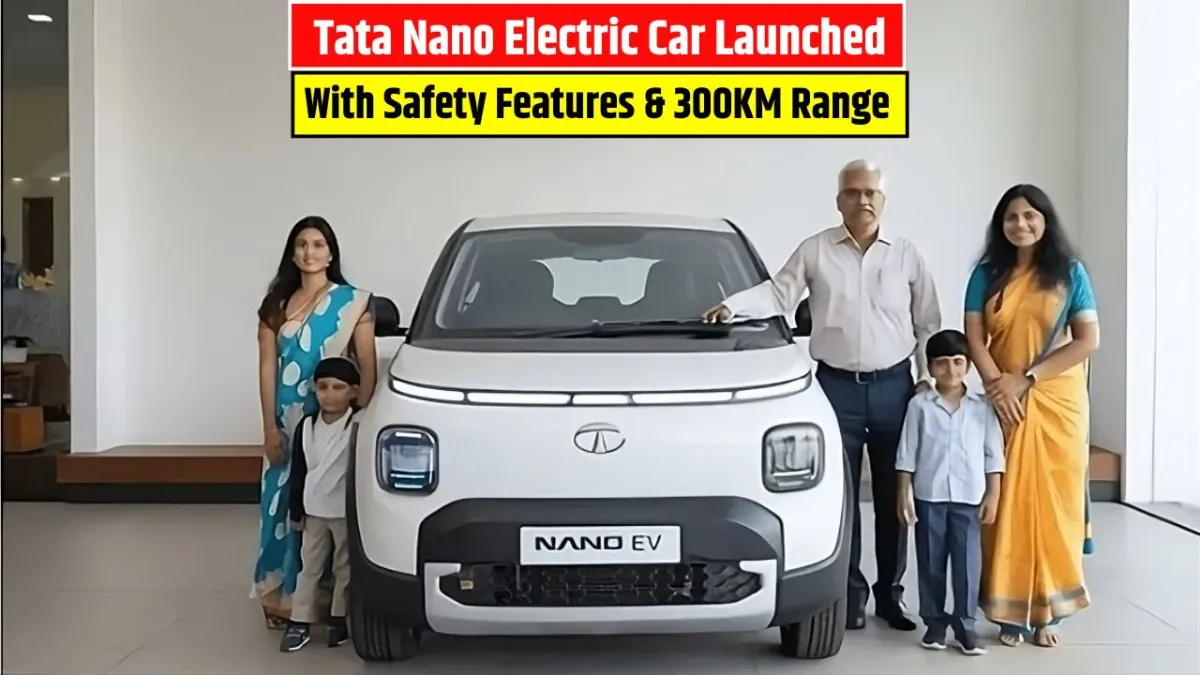
Tata Nano EV 2026 India’s electric vehicle segment is expanding rapidly, and the upcoming Tata Nano EV 2026 is expected to become one of the most affordable electric cars in the country. The electric version of the iconic Tata Nano is likely to return with modern styling, upgraded safety, improved battery technology, and a claimed driving range of 300KM on a single charge. Developed by Tata Motors, this compact EV aims to bring electric mobility within reach of middle-class buyers and first-time car owners.
The original Nano was introduced as the “people’s car,” and now the electric version is expected to revive that vision with a more premium and practical approach. With rising fuel prices and increasing awareness about eco-friendly transport, the Nano EV 2026 could emerge as a smart solution for city commuters.
Modern Design With Urban Appeal
The Tata Nano EV 2026 is expected to feature a refreshed exterior that looks far more modern than the earlier petrol version. The front profile may include sleek LED headlamps, stylish daytime running lights, and a closed grille design that enhances aerodynamic efficiency. The compact dimensions will remain one of its biggest advantages, making it extremely easy to drive in city traffic and park in tight spaces.
The side profile could showcase attractive alloy wheels and subtle body lines, giving the car a more premium look. At the rear, redesigned tail lamps and a clean layout are expected to improve the overall styling. Despite being a small hatchback, the Nano EV 2026 may carry a bold road presence.

300KM Driving Range and Battery Performance
One of the most attractive highlights of the Tata Nano EV 2026 is its expected 300KM driving range. This makes it ideal for daily office travel, school runs, shopping trips, and short weekend drives. The car is likely to be powered by a lithium-ion battery pack designed for efficiency and reliability.
Charging convenience will be a major factor in its popularity. With a standard home charger, the Nano EV may take around four to five hours for a full charge. Fast charging support could allow the battery to reach approximately 80 percent in about one hour. This flexibility makes it practical for urban users who need quick and hassle-free charging options.
Premium Interior and Smart Technology
The cabin of the Tata Nano EV 2026 is expected to be significantly upgraded compared to the earlier Nano. Improved seat comfort, better-quality materials, and a modern dashboard layout may enhance the overall driving experience. A touchscreen infotainment system with smartphone connectivity is likely to be offered, allowing users to access navigation, music, and apps easily.

Features such as a digital instrument cluster, power windows, central locking, and automatic climate control may be included in higher variants. Some reports even suggest the possibility of a sunroof option, which would be a remarkable addition in a budget electric car. These features could position the Nano EV as a value-for-money offering in its segment.
Improved Safety and Build Quality
Safety is becoming increasingly important for Indian car buyers, and Tata Motors has built a strong reputation for producing safer vehicles in recent years. The Nano EV 2026 is expected to include essential safety features such as dual airbags, ABS with EBD, rear parking sensors, and seat belt reminders. The improved body structure and stronger build quality may offer better protection compared to the previous generation.
These enhancements could make the Nano EV a suitable choice for small families who want an affordable yet secure vehicle for daily use.

Affordable Pricing and Low Running Cost
The most exciting aspect of the Tata Nano EV 2026 is its expected starting price of under ₹3 lakh (ex-showroom). If launched at this aggressive price point, it could become one of the cheapest electric cars in India. Government subsidies and EV incentives in certain states may further reduce the effective cost.
In addition to affordable pricing, the Nano EV will likely offer extremely low running costs. Electric vehicles generally require less maintenance since they have fewer moving parts than petrol cars. There is no need for engine oil changes, which helps in reducing long-term expenses. Combined with zero fuel costs, this could make the Nano EV an economical option for budget-conscious buyers.
Tata Nano EV 2026 – Expected Key Specifications
| Feature | Details (Expected) |
|---|---|
| Battery Type | Lithium-ion |
| Driving Range | Up to 300 KM |
| Charging Time | 4–5 Hours (Home), 1 Hour (80% Fast Charge) |
| Seating Capacity | 4 Persons |
| Infotainment | Touchscreen with Smartphone Connectivity |
| Safety Features | Dual Airbags, ABS, EBD |
| Expected Price | Under ₹3 Lakh |
Why Tata Nano EV 2026 Could Be a Game Changer
The Tata Nano EV 2026 has the potential to transform entry-level mobility in India. With its compact design, modern features, practical range, and affordable pricing, it could attract students, working professionals, and small families. As the EV market continues to grow, a budget-friendly electric hatchback like the Nano EV could play a key role in accelerating adoption.

If Tata Motors successfully delivers on the promised specifications, the Nano EV 2026 may once again redefine the concept of an affordable car in India — this time with zero emissions and advanced technology.
1. What is the expected price of Tata Nano EV 2026?
The expected starting price is under ₹3 lakh (ex-showroom), making it highly affordable.
2. What is the driving range of Tata Nano EV 2026?
The car is expected to offer a range of up to 300KM on a single full charge.

3. Does Tata Nano EV 2026 support fast charging?
Yes, it is likely to support fast charging, allowing around 80 percent charge in about one hour.
4. Is Tata Nano EV suitable for city driving?
Yes, its compact size, efficient range, and low running cost make it ideal for daily urban commuting