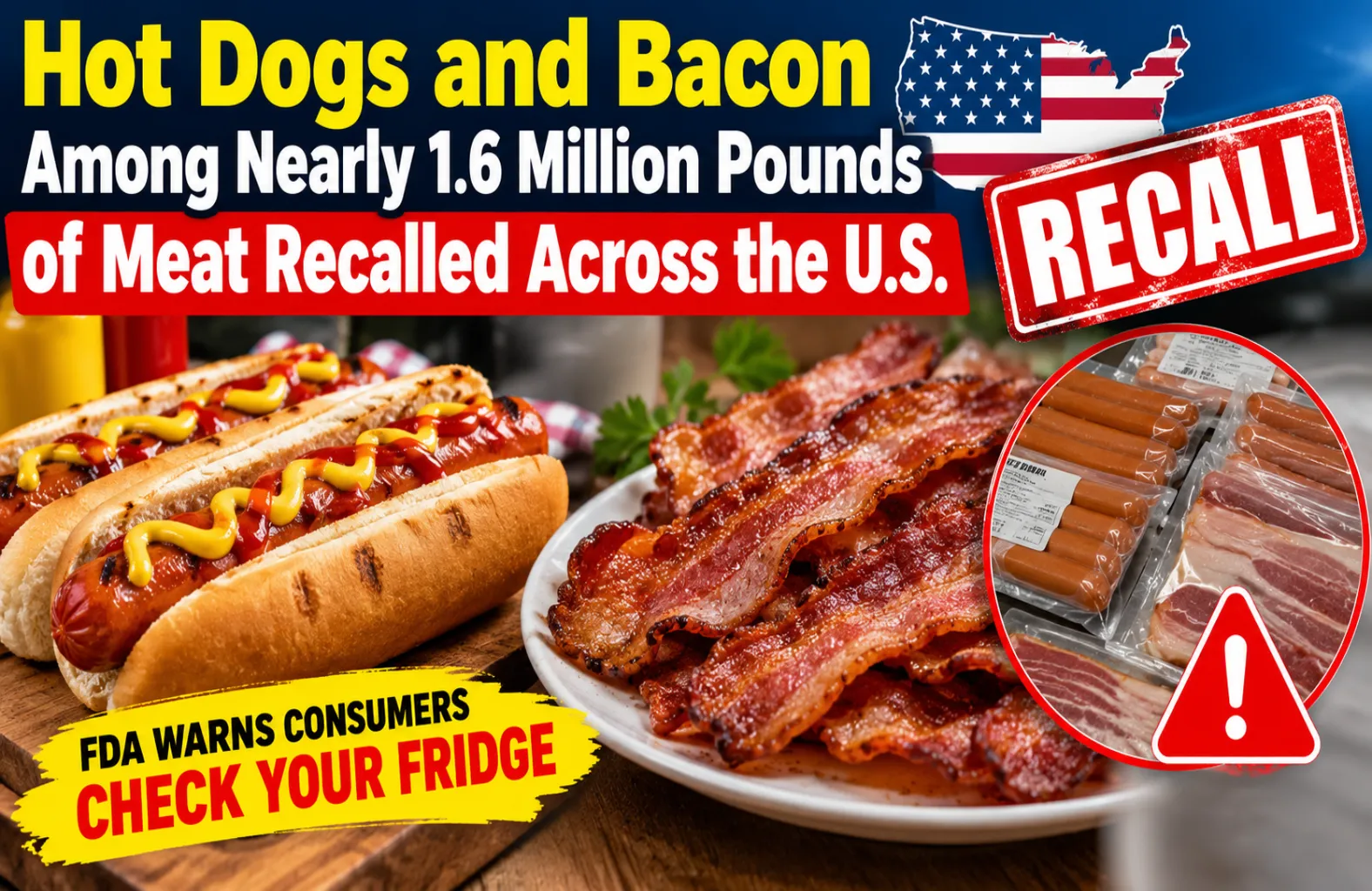

Hot Dogs and Bacon : A major meat recall is affecting nearly 1.6 million pounds of ready-to-eat meat and poultry products distributed across the United States. The recall includes popular foods such as hot dogs, bacon, sausages, deli meats, ham and smoked brisket.
The recall was announced by the U.S. Department of Agriculture’s Food Safety and Inspection Service (FSIS) after an investigation found that certain products may have been stored at unsafe temperatures. Consumers are being urged to check their refrigerators and freezers for potentially affected items.
The most important thing to know is that consumers should not eat any product confirmed to be part of this recall.
Why Were Nearly 1.6 Million Pounds of Meat Recalled?
Massachusetts-based Kayem Foods Inc. voluntarily recalled approximately 1,584,361 pounds of ready-to-eat meat and poultry products after a warehouse refrigeration problem raised food safety concerns.
According to the FSIS announcement, the issue came to light after a retail customer reported receiving products that were warm when delivered on October 1, 2026.
An investigation found that a warehouse cooler had experienced temperature fluctuations while storing various meat and poultry products. Improper storage temperatures can allow harmful bacteria to grow, potentially making food unsafe to consume.
The recall was announced on October 17, 2026, and was classified as a Class I recall, the highest risk category used by the FSIS.
Which Meat Products Are Included in the Recall?
The recall covers a wide range of ready-to-eat meat and poultry products manufactured between approximately March 31 and October 7, 2026.
Affected products include:
- Hot dogs: Certain packaged beef and pork hot dogs.
- Bacon: Certain smoked and thick-cut bacon products.
- Sausages: Various pork and chicken sausage products.
- Deli meats: Certain ham, turkey, bologna and other sliced meats.
- Smoked brisket: Selected ready-to-eat beef products.
- Other meats: Certain ham steaks, corned beef, kielbasa and meatballs.
Not every product sold under these categories is affected. Consumers must check the exact product name, package details and establishment number against the official recall list.
Which Brands Are Affected?
The recall involves products sold under multiple brand names, including:
| Brand | Examples of Products |
|---|---|
| Kayem | Hot dogs, bacon and other meats |
| Al Fresco | Chicken sausages and other poultry products |
| McKenzie | Selected meat products |
| Triple M | Ham and other packaged meats |
| Deutschmacher | Selected ready-to-eat meats |
| Jordan’s | Selected meat products |
| Essem | Selected packaged meats |
| Genoa | Selected ham and deli products |
| Winnisimmet St. Butchery | Selected meat products |
Important: This is not a complete product-by-product list. Check the USDA’s official recall notice for the specific products, package sizes and identifying information.
How Can You Identify Recalled Meat Products?
Consumers can look for the establishment numbers printed inside the USDA mark of inspection on the product packaging.
The three establishment numbers associated with this recall are:
- EST. M/P 7839
- EST. P 20935A
- EST. M 9520
The affected products were distributed to retail stores and foodservice locations across the United States, as well as to Hong Kong.
Some products may have been purchased weeks or months ago and could still be stored in refrigerators or freezers. Checking older packages is therefore important.
For the complete list of affected products and labels, visit the
What Should Consumers Do If They Have Recalled Meat?
The FSIS advises consumers not to eat the recalled products.
If you discover an affected item in your home, follow these precautions:
- Do not eat it. Do not taste the product to determine whether it is safe.
- Check the package details. Compare the product information and establishment number with the official recall notice.
- Throw it away or return it. Follow the recall instructions for disposal or return to the retailer.
- Clean affected surfaces. If leaking packaging or meat juices may have contaminated your refrigerator or other surfaces, clean and sanitize them appropriately.
- Seek medical advice if concerned. Contact a healthcare professional if you develop symptoms after consuming a potentially affected product.
Cooking or reheating should not be used as a substitute for following the recall instructions.
Have Any Illnesses Been Reported?
At the time of the initial recall announcement, no confirmed illnesses linked to the recalled products had been reported.
However, the absence of confirmed illnesses does not mean the products are safe. Food that has been stored at improper temperatures may pose a risk even if it looks and smells normal.
People who are pregnant, adults aged 65 and older, young children, and people with weakened immune systems can be particularly vulnerable to certain foodborne illnesses.
Anyone who believes they may have become ill after eating a recalled product should contact a healthcare professional.
Tips for a Safer Kitchen
-
Maintain the Right Refrigerator Temperature: Keep your refrigerator at 40°F (4°C) or lower and use a thermometer to monitor it.
-
Refrigerate Perishable Foods Promptly: Do not leave ready-to-eat meat products at room temperature for more than two hours, or more than one hour when temperatures exceed 90°F (32°C).
-
Store Meat Properly: Keep opened packages sealed in airtight containers or leak-proof bags to maintain freshness and prevent cross-contamination.
-
Follow Food Recall Updates: Subscribe to food safety alerts from the USDA and FDA to stay informed about recalled products.
-
Check Products Before Serving: Before family gatherings, barbecues, or holiday meals, verify that your hot dogs, bacon, and other packaged meats are not included in an active recall.
1. How much meat has been recalled in the United States?
Approximately 1,584,361 pounds of ready-to-eat meat and poultry products are included in the Kayem Foods recall.
2. Are hot dogs and bacon included?
Yes. Certain hot dogs and bacon products are included, along with selected sausages, deli meats, ham, brisket and other ready-to-eat products.
3. Why were the products recalled?
The products may have experienced unsafe storage temperatures because of a malfunction affecting a warehouse cooling system.
4. Which brands should consumers check?
Consumers should check selected products sold under Kayem, Al Fresco, McKenzie, Triple M, Deutschmacher, Jordan’s, Essem, Genoa and Winnisimmet St. Butchery.
5. Can I eat the meat if it smells normal?
No. Smell and appearance cannot reliably establish whether a recalled food is safe. Do not consume any product identified as part of the recall.
6. Where can I find the complete recall list?
Visit the USDA FSIS website and search for the Kayem Foods recall announced October 17, 2026. Review the product descriptions and identifying details carefully.
The recall of nearly 1.6 million pounds of meat and poultry products highlights the importance of proper food storage and checking official food safety notices. Certain hot dogs, bacon, sausages, ham and deli meats are affected because of potential temperature problems during storage.
Consumers should check their refrigerators and freezers, verify product details against the official USDA recall notice, and avoid eating any affected items. Although no confirmed illnesses had been reported at the time of the announcement, following the recall instructions remains essential for protecting your health.

Read More